Cost guide · Repair
Roof repair cost in St. George, Utah
As of August 2026, most roof repairs in St. George, Utah cost $395 – $1,966 typical — the national average is $1,172 — with minor fixes starting around $150 and major structural work running $3,000–$6,000 or more.
St. George Roof Cost · St. George, UT — prices verified August 10, 2026.
Repair cost by severity
Roofers price repairs by scope, not by symptom — a small ceiling stain can be a $200 flashing fix or a $4,000 decking replacement depending on how long the water ran. The severity bands look like this:
| Severity | Typical cost |
|---|---|
| Minor (a few shingles, small leak seal) | $150 – $1,000 |
| Moderate (larger sections, underlayment work) | $1,000 – $3,000 |
| Major (structural, decking, widespread water damage) | $3,000 – $6,000+ |
Repair cost by type of work
| Repair | Typical cost |
|---|---|
| Roof leak repair | $360 – $1,550 |
| Flashing repair (chimney, vents, valleys) | $200 – $500 |
| Shingle replacement (up to ~25 shingles) | $100 – $300 |
| Shingle replacement (per 100 sq ft section) | $350 – $1,000 |
| Tile roof repair (cracked/slipped tiles) | $500 – $2,500 |
| Flat/low-slope roof repair (membrane, foam patch) | $200 – $500 |
| Hail damage repair | $700 – $4,000 |
| Emergency / unscheduled call-out premium | $200 – $300 above scheduled rates |
What actually breaks roofs in St. George
National repair guides assume hail and ice dams. St. George's failure modes are different, and knowing yours helps you sanity-check a diagnosis:
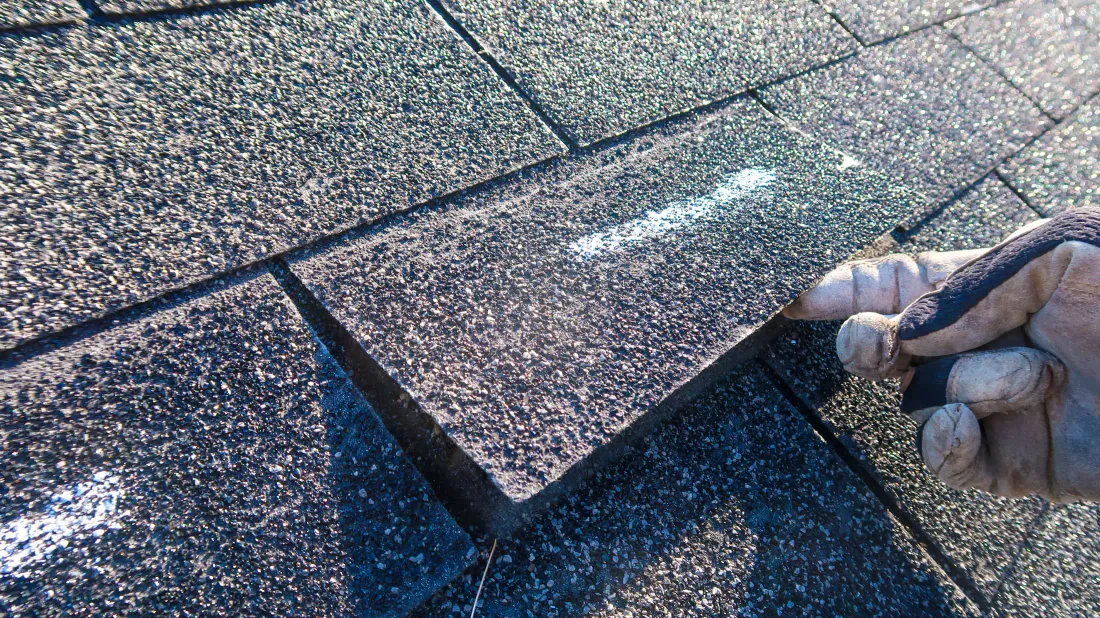
- UV-aged shingles. The desert sun cooks the asphalt binder out of shingles years ahead of national schedules. Symptoms: curling edges, cracking, granules collecting in gutters. Isolated patches are repairable; roof-wide symptoms are an age problem, not a repair problem.
- Monsoon wind lift. Recorded gusts near St. George hit 61 mph in March 2025 and 55 mph in February 2026 — enough to lift and crease shingles, especially on roofs where the sealant strips have already heat-aged. Wind damage is also the most common legitimate insurance scenario here — if a storm did it, read the storm and insurance guide before paying out of pocket.
- Flashing and penetration failures. Thermal cycling works fasteners loose and cracks sealant at chimneys, swamp-cooler mounts, and vents. Cheap to fix ($200 – $500) and the most common source of "mystery" leaks.
- Cracked tile from foot traffic. Concrete and clay tile handle decades of sun but break under a single misplaced step — often an AC tech's or satellite installer's. Tile repairs run $500 – $2,500, more if a discontinued profile has to be matched — see our tile repair cost guide for the full breakdown.
- Foam roofs past their recoat window. Flat-roof sections with spray foam degrade fast once the protective coating thins. Patches are cheap ($200 – $500); skipping the recoat cycle is what turns them into replacements. The flat roof repair guide covers foam, membrane, and drainage repairs in detail.
How repair pricing actually works
Two structural facts explain most surprises on repair invoices. First, roofers price labor at $40 – $100 per hour, but every job carries a practical minimum — a crew, a truck, ladders, and liability show up whether the fix takes twenty minutes or four hours. That's why "just one shingle" rarely bills under a couple hundred dollars, and why bundling small items (that loose flashing and the cracked pipe boot) into one visit is the easiest savings available.
Second, access and material drive the spread. A walkable-pitch asphalt roof is the cheap end of every range on this page. Tile multiplies labor because crews must work off boards or risk breaking the tiles around the repair — part of why tile repairs run $500 – $2,500 against $100 – $300 for a comparable asphalt fix. Steep pitches add safety rigging; two-story homes add time. When a bid looks high, ask which of these is doing it — a good contractor can point to the line.
What you can safely check yourself
You don't need to get on the roof to scope a problem — and on tile, you specifically shouldn't, since foot traffic is a leading cause of the cracks this page prices. From the ground and the attic:
- Binoculars from the yard: lifted or creased shingle tabs (wind), missing shingles, slipped or visibly cracked tiles, rusted or lifted flashing at the chimney and vents.
- Gutters and downspout splash zones: heavy granule accumulation is asphalt UV-aging in progress — expected on an older roof, a warning sign on a young one.
- Attic after the next rain (or with a garden hose): water stains on decking, daylight at penetrations, damp insulation. Photograph anything you find — it gives the roofer a head start and gives you a record of pre-existing scope.
- Ceilings and top-floor walls: new stains, bubbling paint, or musty smell along exterior walls. Map the stain location against the roof plan — water travels, so the entry point is often uphill of the stain.
Leave to professionals: walking any roof (especially tile), lifting shingles to inspect underlayment, and anything involving the electric service mast. The photos you take from the ground are plenty to get accurate phone estimates. Not sure what a symptom means? The roof damage signs guide decodes each one — and which are storm-claim material.
Timing: beat the monsoon rush
Repair demand in St. George spikes from July through September, when monsoon cells stack wind damage on top of every marginal roof in the county — and emergency pricing ($200 – $300 above scheduled rates) kicks in for the callers who waited. The cheap version of every repair on this page is the one scheduled in spring or fall, after a calm-weather inspection found it early. If you already know something is marginal — aging flashing sealant, a few brittle shingles — fixing it in May costs less than tarping it in August.
Start with an inspection when in doubt
A professional inspection runs $100 – $400 and settles the question every other number on this page depends on: is this an isolated problem or a roof-wide one? That's a cheap answer compared to guessing wrong in either direction. Photograph everything, ask for the findings in writing, and be appropriately skeptical of a free inspection that concludes you need a whole new roof — our roof inspection guide covers what a real inspection checks, how often you need one, and how to tell it from a sales call.
When repair stops making sense
Repairs are the right answer for young roofs with isolated damage. They stop making sense when the roof itself is the problem: recurring leaks in different places, shingles failing roof-wide, or a major repair bid on a roof already past 15 St. George summers. The replacement cost guide has the crossover math — and the material-by-material breakdown if the answer turns out to be a new roof.
Free quotes
Get repair quotes from local St. George roofers
Tell us what's going on with your roof and we'll connect you with an independent local contractor for a free, no-obligation quote.
Good to know
Frequently asked questions
How much does it cost to fix a roof leak in St. George?
Roof leak repairs run $360–$1,550 on average, per Angi data updated August 2026. The price climbs with how long the leak ran before repair — a caught-early flashing leak sits at the bottom of the range, while a leak that soaked decking or drywall can push into the thousands.
What does a roof inspection cost?
A professional roof inspection costs $100–$400, per HomeGuide data published February 2026. In St. George it is the best money in this guide: an inspection settles the repair-or-replace question before you spend four figures on either answer.
Why are my shingles curling or cracking?
In St. George, curling and cracking shingles are usually UV and heat aging rather than storm damage. Desert sun breaks down the asphalt binder, the shingle loses granules and flexibility, then daily thermal cycling does the rest. Isolated curling can be patched, but roof-wide curling means the roof is telling you its age.
Do roofers charge more for emergency repairs?
Yes — expect $200–$300 above scheduled rates for unscheduled emergency call-outs, per HomeGuide. If a leak is active, an inexpensive tarp over the affected slope buys you time to schedule normally and get more than one bid.
When is a repair no longer worth it?
When repairs recur across different areas of the roof, when damage is widespread rather than isolated, or when any major repair lands on a roof past ~15 years in this climate. At that point, compare the repair bid against replacement cost per year of remaining life — our replacement guide has the full framework.