Guide · Storm & insurance
Storm and hail roof damage in St. George: the insurance claim guide
As of August 2026, homeowners insurance in St. George, Utah generally covers sudden storm damage to roofs — wind, hail, and falling debris, with local repairs typically running $700 – $4,000 — and Utah law bans contractors from covering your deductible and gives you five business days to cancel a repair contract if your claim is denied.
St. George Roof Cost · St. George, UT — figures and statutes verified August 10, 2026.
First, the honest local storm profile
Most storm-damage marketing is written for Colorado's hail alley and copy-pasted everywhere else. St. George's actual recorded storm history tells a different story: aggregated NWS/Mesonet reports for the area show one hail event in the last two years — half-inch hail on October 18, 2024 — against repeated damaging wind, including a 61 mph gust on March 2, 2025 and 55 mph on February 16, 2026, plus the microburst winds that ride every summer monsoon cell.
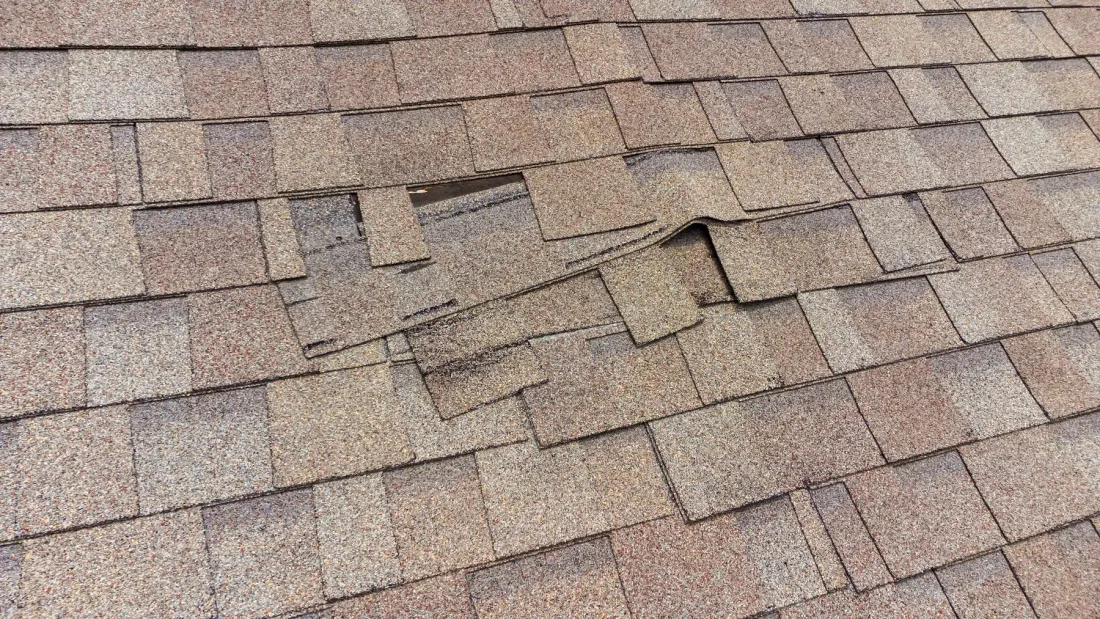
That matters for two reasons. First, your legitimate claim here is most likely a wind claim: lifted, creased, or torn-off shingles, damage concentrated on the wind-facing slopes and ridge. Second, when someone knocks on your door after a storm announcing widespread hail destruction across your neighborhood, the local weather record usually disagrees — and that's your first vetting signal, before you ever check a license.
The local storm calendar
Southern Utah's damaging weather clusters in two windows. The North American Monsoon runs roughly mid-June through September: afternoon thunderstorm cells that arrive fast, drop intense rain, and — the part that matters for roofs — push outflow and microburst winds that lift shingles and drive rain sideways under flashing. The second window is spring frontal wind, the season that produced the area's 61 mph March gust. Between those windows, damage mostly waits to be discovered — which is why the cheapest storm strategy is a calm-season inspection that finds the lifted shingle before the next cell exploits it. It also means an adjuster will reasonably ask why a "storm leak" first appeared in a month with no recorded storms; the weather record cuts both ways.
What's covered, what isn't
- Covered (typically): sudden damage from a specific event — wind tearing shingles, hail impact, a tree limb through the decking. Resulting interior water damage from that opening is usually covered too.
- Not covered: wear and tear, UV-aged shingles at end of life, long-term slow leaks, and neglected maintenance. In a climate that ages asphalt as fast as this one, adjusters here see a lot of "storm claims" that are really 20-year-old roofs — which is exactly why documentation tying damage to a storm date matters.
- Read your wind/hail deductible. Some policies carry a separate wind/hail deductible set as a percentage of your dwelling coverage — on a $400,000 dwelling limit, a 1% deductible is $4,000 before the first insurance dollar. Know the number before you file.
The claim, step by step
- Document the damage before anything is touched. Photograph and video the roof from the ground and every accessible angle, plus interior ceilings, the date, and any fallen debris. Note the storm date — you can cross-check it against National Weather Service records for St. George.
- Prevent further damage (and keep the receipts). Tarp active leaks or hire an emergency tarp-over (typically $175–$700) — see our emergency roof repair guide for what to do first. Most policies require reasonable steps to prevent further damage and reimburse the cost, so keep every receipt.
- Get an independent damage assessment. Have a local roofer you chose — not one who knocked on your door — inspect and document the damage in writing with photos, before you decide whether to file. An inspection runs $100–$400 and some roofers assess storm damage free.
- Compare the damage against your deductible. Read your policy for the wind/hail deductible — some policies set it as a percentage of dwelling coverage, not a flat number. If repairs cost less than or near the deductible, filing gains you nothing and still goes on your claims history.
- File promptly and meet the adjuster in person. If the damage clearly exceeds the deductible, file with photos and your written assessment. Have your roofer present at the adjuster inspection so scope is agreed on the roof, not negotiated by email later.
- Only sign a repair contract that complies with Utah law. Utah Code 13-50 requires insurance-funded repair contracts to disclose your cancellation rights and include a cancellation form. No deductible "help," no signing on the adjuster's hood — and if the claim is denied, you have five business days to cancel in writing.
Working with the adjuster (where claims are won and lost)
The adjuster meeting sets the claim's scope — everything after it is negotiation against that document. Three practical rules: have your own roofer on the roof at the same time, so disagreements about what counts as storm damage get argued with both parties looking at the same shingle; get the adjuster's scope sheet in writing before work is authorized; and understand that supplements are normal — when tear-off reveals damage the adjuster couldn't see (soaked decking is the classic), the contractor documents it and files a supplement rather than eating it or billing you. A local contractor who has processed Utah claims will know this dance; a canvasser working your street for a season may not be around when the supplement — or the warranty — comes due.
Your Utah Code 13-50 protections, in plain English
Utah passed the Insured Homeowners Protection Act (Utah Code Title 13, Chapter 50) specifically because of post-storm roofing sales abuses. Three protections do the heavy lifting:
- No deductible games — §13-50-302. A contractor "may not rebate or offer to rebate any portion of an insurance deductible as an inducement to the sale of a good or service." Contracts must carry a notice saying exactly that (§13-50-303). Anyone offering to "eat," waive, or refund your deductible is proposing a statutory violation that typically requires misstating the job cost to your insurer — walk away.
- Claim denied? Five business days to cancel — §13-50-202. If the contractor knew the work was expected to be insurance-paid and the insurer denies the claim, you can cancel in writing within five business days of the denial. The contractor must return your money within 10 business days, less the reasonable value of work you expressly authorized.
- Cancellation rights in the contract — §13-50-203. Insurance-funded repair contracts must disclose these rights and include a detachable cancellation form. A contract missing them is itself a compliance red flag.
- Careful with assignments — §13-50-301. Signing benefits of your claim over to a contractor requires specific written notices that you're giving up policy rights. Don't sign an assignment at the door; have your insurer or an attorney look first.
Statute text read directly from the enrolled bill and code at le.utah.gov, verified August 10, 2026. This is general information, not legal advice — for a dispute, talk to a Utah attorney or the Utah Insurance Department's consumer division.
Storm-chaser red flags
- Knocks on your door within days of a storm, claims your whole neighborhood has hail damage (check that against the storm record above).
- Offers to cover, waive, or "work around" your deductible — illegal in Utah, see §13-50-302.
- Pressure to sign an agreement or assignment "so we can get on the adjuster's schedule."
- Out-of-state plates, no verifiable local address, no Utah DOPL license number on paperwork.
- Wants the insurance check endorsed over before materials are on site.
The full contractor-vetting checklist — license lookup, insurance certificates, complaint-record reading — is in the vetting guide. If the damage turns out to be repairable without insurance, the repair cost guide has the numbers; if the roof's a total loss, start with the replacement cost guide ($7,825 – $25,320 depending on material).
ACV vs. RCV: the number that decides your payout
Two policies that both "cover wind damage" can pay wildly different amounts. Replacement cost value (RCV) policies pay what it costs to replace the roof today, usually in two checks — the depreciated amount up front and the recoverable depreciation after the work is done. Actual cash value (ACV) policies pay replacement cost minus depreciation, period — and on a 15-year-old St. George shingle roof, depreciation can be most of the roof's value. Some insurers quietly move older roofs onto ACV schedules at renewal; if your roof is past 10 years, check which one you have before storm season, not after.
When not to file
Claims are for losses that clear your deductible with room to spare. A wind repair that bids at $700 – $4,000 against a $2,500 wind/hail deductible is a coin-flip at best — and the claim goes on your CLUE report either way, which follows the house and can nudge premiums for years. Get an independent repair bid first, compare it to the deductible, and file when the math is clearly in your favor.
Free quotes
Storm damage? Get an independent local assessment
Tell us what's going on with your roof and we'll connect you with an independent local contractor for a free, no-obligation quote.
Good to know
Frequently asked questions
Does homeowners insurance cover roof leaks in Utah?
Insurance covers roof leaks caused by a sudden, covered event — wind tearing shingles off, hail impact, falling debris — but not leaks from age, wear, or deferred maintenance. The adjuster’s core question is always “what single event caused this?”, so documentation tying the leak to a specific storm date is what makes or breaks the claim.
Is it illegal for a roofer to pay my insurance deductible in Utah?
Yes. Utah Code §13-50-302 prohibits residential contractors from rebating or offering to rebate any portion of an insurance deductible as an inducement, and §13-50-303 requires contracts to disclose that prohibition. A “we’ll take care of your deductible” pitch is a statutory violation and the single most reliable storm-chaser red flag.
What if my insurance claim is denied after I signed with a roofer?
Utah Code §13-50-202 gives you the right to cancel the contract within five business days of receiving the denial, if the contractor knew the work was expected to be insurance-paid. The contractor must return your payments within 10 business days, minus the reasonable value of any work you expressly authorized.
How common is hail damage in St. George?
Rare compared to wind. Recorded storm data for the St. George area shows one hail event in the past two years — half-inch hail in October 2024 — versus multiple damaging wind events, including a 61 mph gust in March 2025. Be skeptical of anyone canvassing after a storm claiming widespread hail destruction here.
Should I file a claim for minor roof damage?
Usually not if the repair cost is near your deductible. Hail repairs average $700–$4,000 and many wind repairs come in under $1,000 — while a filed claim stays on your CLUE history and can affect premiums. Get a repair bid first, then decide with real numbers on both sides.